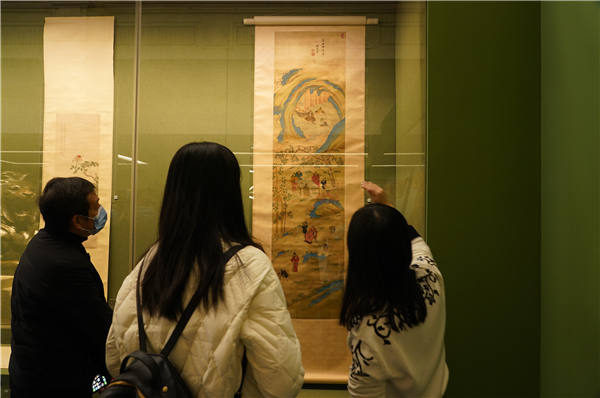
Gu Embroidery
Introduction
Gu Embroidery (or Guxiu), originating in 16th-century Shanghai's Luxiang Garden during the Ming Dynasty (1368-1644), is a revered Chinese embroidery technique. It's celebrated as "painting embroidery" (huaxiu), a sophisticated art form that seamlessly blends painting aesthetics with needlework precision to recreate the nuances of traditional Chinese paintings. This approach elevates embroidery to a fine art, prized for its artistic merit and painstaking execution.
Rooted in the refined artistic traditions of the Jiangnan region, Gu Embroidery evolved from Song Dynasty (960-1279) experiments in replicating paintings through embroidery. It reached its peak during the Ming Dynasty, favored by affluent families and nobility who valued its sophisticated elegance and artistic refinement.
Distinguished by its meticulous detail, Gu Embroidery draws inspiration from classical Chinese art, particularly flora, fauna, and landscape depictions. It utilizes fine silk threads on satin or silk fabrics, achieving lifelike imagery reminiscent of brush paintings. Beyond technical skill, it reflects China's rich cultural heritage and aesthetic sensibilities.
Techniques
Gu Embroidery techniques masterfully fuse painting principles with needlework skills. The process begins with designs inspired by Song and Yuan (1271-1368) Dynasty paintings, meticulously transferred onto satin or silk.
Key to Gu Embroidery is the use of meticulously dyed fine silk threads, offering a vast palette of colors and subtle gradations. These threads are skillfully manipulated to mimic brushstrokes, demanding exceptional precision and artistic intuition to achieve seamless color blends and lifelike detail.
Layering and shading techniques are employed to create depth and dimensionality, giving the embroidered images a three-dimensional quality. Varying thread thicknesses and diverse stitching patterns further enhance the design's complexity and visual richness.
Modern Gu Embroidery incorporates computer-aided design (CAD) for intricate painted elements, enhancing accuracy and detail, especially in floral and avian depictions. Despite technological advancements, the core essence of traditional techniques remains central. Gu Embroidery endures as a symbol of craftsmanship and enduring creativity.
Cultural Significance
Gu Embroidery holds deep cultural significance, serving as both art and social emblem within Chinese history. During the Ming Dynasty, its intricate designs and elegant aesthetics were highly valued by the elite, adorning garments, furnishings, and ceremonial items to signify status and refined taste.
Beyond aesthetics, Gu Embroidery uniquely merges painting visuals with tactile embroidery, reflecting the Chinese emphasis on harmony and balance. This artistic fusion showcases technical skill while embodying central themes in Chinese art and philosophy.
Gu Embroidery also serves as a historical record, capturing artistic and cultural trends of the Ming and Qing dynasties. Designs inspired by classical art, literature, and nature offer insights into their values. Floral and avian motifs reflect the Chinese appreciation for nature and its symbolic meanings.
Now recognized as important cultural heritage, Gu Embroidery has been showcased in institutions like the Suzhou Museum West and the Shanghai History Museum. Such exhibitions celebrate its craftsmanship while aiming to preserve and promote this tradition for future generations.
Modern Developments
Gu Embroidery has undergone a resurgence, fueled by the preservation of traditional arts and crafts. Modern technology has boosted this revival, enabling more intricate and detailed designs through computer-aided design (CAD) to enhance vividness in patterns, such as complex flower and bird motifs.
Gu Embroidery's influence extends to contemporary fashion and design. Its elegant patterns and sophisticated techniques have inspired designers to incorporate elements of the traditional art form, broadening its reach and demonstrating its versatility and relevance in modern applications.
Featured in cultural projects, Gu Embroidery has further cemented its status as a symbol of Chinese heritage. The embroidery technique was used to create costumes for the historical drama Song of Youth, showcasing the beauty of Gu Embroidery, earning widespread praise for its historical and artistic accuracy.
Educational initiatives, including workshops and training programs, aim to pass on the skills required to master this art form to younger generations. Such efforts ensure Gu Embroidery thrives as a living tradition, evolving while retaining its essence, captivating and inspiring.








